Power BI Health Check
Is your Power BI environment becoming slower, harder to maintain or more complex than it should be?
BEYOND COACHING
I work across Power BI, Microsoft Fabric, AI, data architecture, training and the way data teams actually work. Sometimes the answer is technical. Sometimes it is about ownership, capability or decision-making. Often it is both.
START WITH THE PROBLEM
You do not need to decide whether you need consulting, training, mentoring or a workshop before we talk. Start with what is not working, what needs to change or what you are trying to build. We can choose the right format afterwards.
FIX SOMETHING
Is your Power BI environment becoming slower, harder to maintain or more complex than it should be?
Is the model underneath your reports helping you — or quietly creating technical debt?
The report exists. But can people actually use it to make decisions?
Your measures work. But do they need to be this complicated?
Does every source change create another Power Query problem?
BUILD BETTER
Are you building in Microsoft Fabric — but unsure whether the architecture will still make sense when the solution grows?
Should you move to Fabric — and if so, what should actually move first?
Are you paying for the right Fabric capacity — and using it wisely?
You need governance. You probably do not need a 70-page governance document.
Personal, team, departmental, DEV, TEST, PROD — what should actually go where?
SCALE YOUR TEAM
You wanted self-service analytics. Did you accidentally create self-service report chaos instead?
Do you need a Center of Excellence — or simply a better way to coordinate BI?
You deployed Power BI. Why are people still exporting everything to Excel?
Your people are capable. Why does delivering data products still feel harder than it should?
Are you building exactly what stakeholders asked for — and still missing what they actually needed?
USE AI PRACTICALLY
You want to use AI. Is your organisation actually ready to use it well?
Where could AI genuinely save time or improve decisions in your organisation?
How can analysts and developers use AI without turning their workflow into prompt roulette?
You enabled Copilot. Now what?
How do you encourage people to use AI without creating a governance mess?
GROW PEOPLE
Your team knows Power BI. But does everyone work from the same foundations?
What if the most valuable Power BI skill is knowing when not to start building yet?
You do not need someone to build it for you. You need someone experienced to challenge the decision.
You know the tools. What should you develop next?
The technical part may no longer be the hardest part of your role.
LOOKING FOR TEAM TRAINING?
Power BI, Microsoft Fabric, DAX, Power Query, data modelling, AI, Copilot, DataOps and ways of working — shaped around the team, its current level and the situations people actually face at work.
Focused workshop · full-day training · team bootcamp · multi-session programme · training + office hours
Explore tailored trainingHOW WE CAN WORK TOGETHER
I keep the format explicit because consulting, technical sparring, mentoring and coaching are not interchangeable.
You want expertise, analysis and a clear professional recommendation on what I would change and why.
You already own the problem and the decision. You want an experienced second perspective to challenge assumptions and compare trade-offs.
The organisation does not only need an answer. The team needs to understand the topic and work differently afterwards.
You want to develop capability with guidance from someone who has worked with the technology and the problems you are facing.
You do not need my technical answer. You need space, challenge and questions that help you find your own answer and take responsibility for what comes next.
COACHING ≠ CONSULTING
In coaching, I do not tell you what decision to make. In consulting, giving you a clear expert recommendation may be exactly why you invited me. In mentoring, I can share my own experience. In technical sparring, we can challenge a decision together.
The method follows the problem.
EXPERIENCE IN PRACTICE
Business Intelligence & AI — training, workshops and work across multiple programme editions.
Delivered for organisations including the pharmaceutical and wind energy sectors.
Individual work with people developing Power BI, BI and analytics capabilities.
Multiple participant cohorts, live sessions, workshops, Q&A and practical exercises.
FROM CLIENT ROOM TO CONFERENCE STAGE
Self-service BI, AI and Copilot, DataOps, requirements, Power BI and Fabric all become more interesting when we look at the system and the people working inside it.
WHERE TO FIND ME NEXT
Conferences and events where I’ll be sharing experience across Power BI, Microsoft Fabric, AI, self-service BI and the human side of working with data.
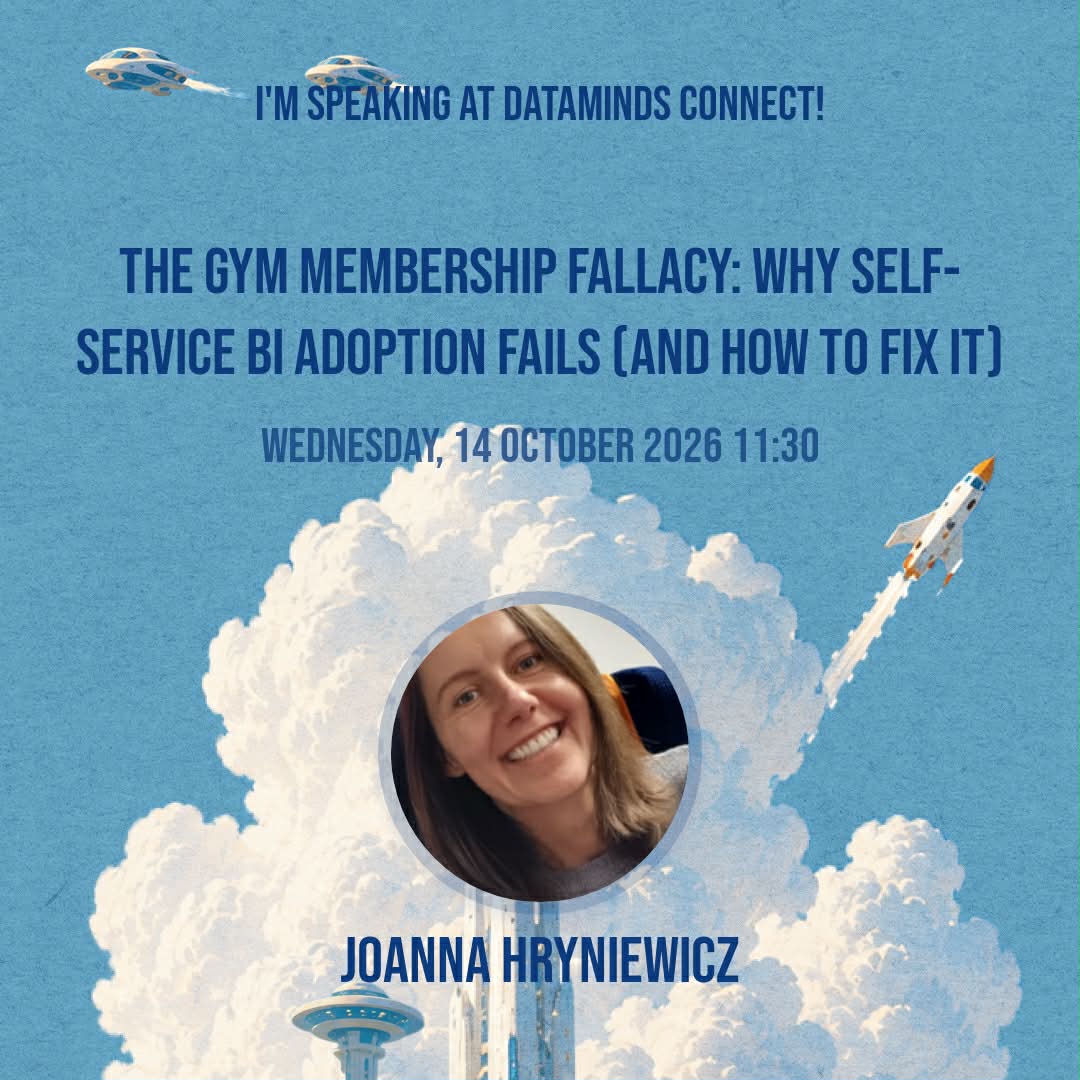
dataMinds Connect 2026
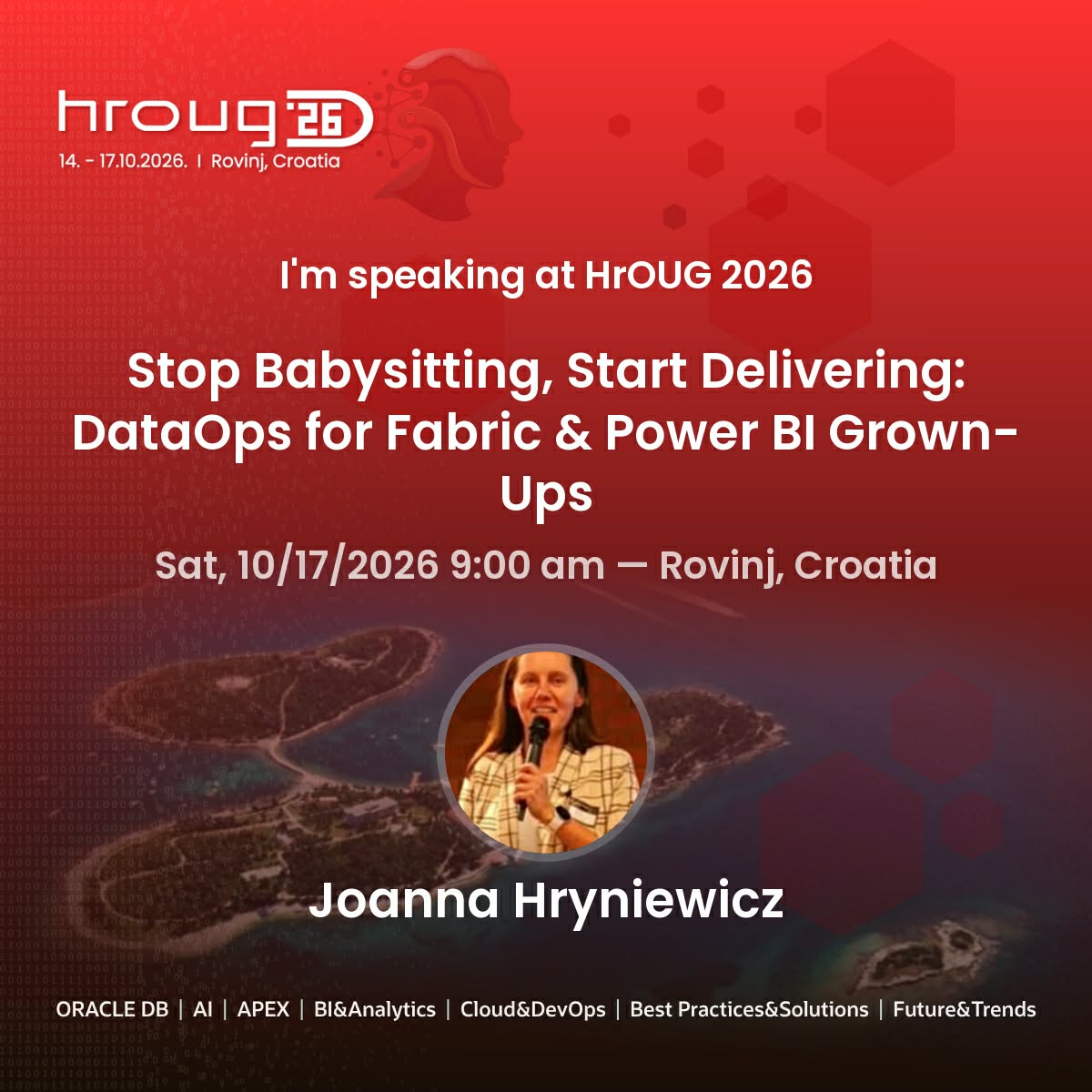
HrOUG 2026
PREVIOUS EVENTS
Ask, Don’t Build: The Coaching Questions That Save Your Power BI Project
Copilot Won’t Fix Your Chaos: Rethinking Data Work in Fabric Era
Event co-host
Navigating the Semantic Seas: Optimizing Power BI Models for Capacity, AI, and Calm Waters
Power BI Copilot — from the perspective of a business user, developer and admin
TECH × HUMAN
A technically correct solution can still fail through unclear ownership, poor adoption or the wrong problem being solved. A motivated team can still struggle with architecture that creates friction every day. That is why I work at both levels.
WORKING TOGETHER
Some services have a natural timebox. Others may evolve once we understand the problem. I make the scope, expected outcome and way of working clear before we start.
You do not need a formal brief. A few sentences about what is happening, what you have already tried and what you would like to change are enough to begin.
Tell me what you are trying to solvePREFER TO WRITE?
You do not need a polished brief. Whether the topic is Power BI, Fabric, AI, team training, mentoring, coaching or simply a challenge that needs untangling, leave a few details and we can start from there.
AI supports selected parts of my work — it does not replace my judgement, responsibility or relationship with the client.
I use AI tools for tasks such as research, organising information, structuring content and preparing materials. I treat AI as support for my work — not as an autonomous author or decision-maker. Anything I publish or use professionally remains my responsibility.
In coaching, I do not use AI to automatically assess, diagnose or make decisions about a client. AI does not replace attention, confidentiality or human responsibility for the coaching relationship.
AI may support the process. Human responsibility remains.